
RPE Calculator for Powerlifting: Estimate Load and One-Rep Max
You finish a squat set of 315 lb for five reps at RPE 8, but the program only tells you to reduce the weight for the next set. Without a consistent calculation, choosing 285, 295 or 305 lb becomes guesswork, and each option creates a different training effect.
| An RPE calculator for powerlifting converts the set you completed into an estimated one-rep max, then uses that estimate to suggest loads for other rep and RPE targets. |
|---|
| LiftnLog keeps the calculation focused on that training decision rather than treating e1RM as a score by itself. |
Quick answer: How to use an RPE calculator for powerlifting
Follow these steps after a work set:
- Select the squat, bench press or deadlift.
- Enter the weight used, excluding the bar only if your log also excludes it.
- Enter the number of completed reps.
- Rate the set from RPE 6 to RPE 10 based on reps in reserve.
- Calculate the estimated one-rep max, or e1RM.
- Choose the reps and target RPE for the next set or session.
- Round the suggested load to plates you can put on the bar, then update the estimate after lifting it.
Treat the result as a working estimate. Your next set provides new evidence, especially if sleep, fatigue, technique or equipment has changed.
How an RPE calculator for powerlifting works
| Powerlifting RPE | usually uses a scale based on repetitions in reserve, often shortened to RIR. |
|---|---|
| A set at RPE 10 | means no additional complete rep was available. |
| RPE 9 | means approximately one rep remained, |
| while RPE 8 | means approximately two remained. |
The relationship looks like this:
- RPE 10: no reps left
- RPE 9: one rep left
- RPE 8: two reps left
- RPE 7: three reps left
- RPE 6: four or more reps left
Research on the repetitions-in-reserve scale found that trained lifters can use it to report effort during resistance exercise, although accuracy tends to improve as a set gets closer to failure. The original scale and its application are described in this peer-reviewed resistance training study.
A calculator combines three inputs: load, completed reps and reported RPE. It estimates how many total reps the lifter could probably have completed, then converts that performance into an e1RM.
Consider Maya, a hypothetical powerlifter running a three-day squat, bench and deadlift program. Her Monday squat prescription is a top set of five at RPE 8 followed by three back-off sets. She squats 315 lb for five and rates it accurately at RPE 8.
Five completed reps plus roughly two reps in reserve suggests that 315 lb was close to a seven-repetition maximum on that day. Using a common percentage chart, five reps at RPE 8 correspond to about 81.1% of e1RM:
315 ÷ 0.811 = 388.4 lb e1RM
The useful output is about 388 lb, not a false level of precision such as 388.409 lb. Depending on the calculator and available plates, it may be displayed as 388, 390 or 390 lb.
That estimate belongs to this lift, this session and this execution standard. A high-bar squat in sleeves should not automatically set the training load for a low-bar squat in wraps.
RPE chart for powerlifting loads
RPE percentage charts estimate what fraction of a one-rep max a lifter can use for a given number of repetitions and effort rating. The following values are common starting points. They are estimates rather than universal physiological constants.
| Completed reps | RPE 10 | RPE 9 | RPE 8 | RPE 7 |
|---|---|---|---|---|
| 1 | 100.0% | 95.5% | 92.2% | 89.2% |
| 2 | 95.5% | 92.2% | 89.2% | 86.3% |
| 3 | 92.2% | 89.2% | 86.3% | 83.7% |
| 4 | 89.2% | 86.3% | 83.7% | 81.1% |
| 5 | 86.3% | 83.7% | 81.1% | 78.6% |
| 6 | 83.7% | 81.1% | 78.6% | 76.2% |
| 7 | 81.1% | 78.6% | 76.2% | 73.9% |
| 8 | 78.6% | 76.2% | 73.9% | 71.6% |
To estimate e1RM, divide the load by the matching percentage written as a decimal. Maya’s 315 lb set of five at RPE 8 uses 0.811, producing an e1RM of about 388 lb.
To estimate a training load, reverse the calculation. Multiply e1RM by the percentage for the target set. If Maya needs four reps at RPE 7, the chart assigns 81.1%:
388 × 0.811 = 314.7 lb
She could load 315 lb. That may initially look odd because it is the same weight she used for five reps at RPE 8. The lower rep target accounts for the lower effort target.
A chart cannot identify a poor RPE rating. If Maya actually performed the first set at RPE 9, the corresponding e1RM would be about 376 lb rather than 388 lb. A one-point rating error changes the next prescription by enough to matter.
Use the chart as a common language for programming. Let repeated logged performance show whether its percentages fit you.
How to estimate a training load from target reps and RPE
A coach may prescribe a set before any current-day performance is available, such as one squat single at RPE 8 followed by four sets of four at RPE 7. Start with a recent e1RM from the same lift variation.
Suppose Maya’s recent squat e1RM is 388 lb. A single at RPE 8 is approximately 92.2%, giving a target of 357.7 lb. With standard 5 lb jumps, she would round to 355 or 360 lb.
Choose the direction of rounding based on context. Use 355 lb if it is the first week of a block, if warm-ups move slowly, or if the lifter has repeatedly overrated effort. Use 360 lb when the warm-ups are sharp and recent data supports the higher load.
Do not jump straight from the calculator result to the work set. Build toward it with warm-ups that provide information without creating fatigue. Maya might take 315 lb, then 335 lb, before deciding whether 355 lb remains appropriate.
After the single, update the day estimate. If 355 lb feels like RPE 7 instead of 8, the implied e1RM is higher:
355 ÷ 0.892 = 398 lb
The back-off sets can now use the fresher estimate. Four reps at RPE 7 are about 81.1%, which gives 323 lb. Maya could start at 320 lb and adjust after the first set.
This process is autoregulation in practical terms. The planned e1RM gets the session started. The top set updates it. The first back-off set confirms whether the update was sensible.
Avoid changing the load after every small feeling. A warm-up that feels awkward is weak evidence. Two slow warm-ups plus an unexpectedly difficult top set are stronger evidence.
How to estimate one-rep max from reps and RPE
Traditional one-rep max formulas use only weight and completed reps. The Epley formula, for example, is commonly written as:
e1RM = weight × (1 + reps ÷ 30)
For 315 lb and five reps, that formula produces 367.5 lb. It assumes the five-rep set was performed close to the maximum number of available repetitions.
Maya stopped at RPE 8, so two more reps were probably available. Substituting seven potential reps into the same formula gives:
315 × (1 + 7 ÷ 30) = 388.5 lb
That closely matches the percentage-chart result. It does not prove that Maya could squat exactly 388.5 lb in competition. It shows what her submaximal set implies under the selected model.
Estimates become less dependable when the set contains many reps. Technique changes, conditioning and discomfort tolerance contribute more to a set of 10 than to a heavy triple. For powerlifting decisions, sets of one to six reps usually provide cleaner e1RM signals than long accessory sets.
The estimate also depends on exercise specificity. Calculate separate values for competition squat, paused squat and tempo squat. Do the same for touch-and-go bench versus competition-paused bench, and conventional deadlift versus a block pull.
Strength standards matter too. If Maya’s final squat rep is high, the set may still help train her legs, but it should not update her competition squat e1RM as if every rep met depth. Record the issue and keep the previous estimate until a valid set replaces it.
How to use RPE in a powerlifting program
RPE works best when the program defines what the rating changes. A prescription of “work up to something heavy” leaves too much room for mood and plate selection. A useful prescription names the lift, reps, target RPE, set limit and adjustment rule.
For example:
Competition squat: 1 set of 5 @8, then 3 sets of 5 at 92% of the top-set load. Reduce 2.5% if a back-off set exceeds RPE 8.
Maya’s 315 lb top set would produce an initial back-off load of about 290 lb. If the first back-off set is only RPE 6.5, she can keep the weight rather than adding load automatically. The goal of those sets is repeatable volume, not proving that the top-set estimate was conservative.
Beginners need narrower choices. Give a new lifter one target, one acceptable range and a simple adjustment. A prescription such as five reps at RPE 7 to 8, followed by a 5 lb increase next week if technique remains consistent, is easier to execute than asking for frequent percentage recalculations.
More experienced lifters can use RPE to manage day-to-day changes while preserving the program’s structure. The movement, repetition target and number of work sets stay fixed. Load moves within a controlled range.
General resistance-training guidance supports systematic progression rather than random load changes. The American College of Sports Medicine position stand covers progression through load, volume, frequency and other training variables. RPE adds a way to choose the day’s load within that planned progression.
Do not let autoregulation turn a volume day into a max-out. Put upper limits in the program. If the planned single is RPE 8, stop when it reaches RPE 8 even if the calculated e1RM looks encouraging.
Track RPE and e1RM across training sessions
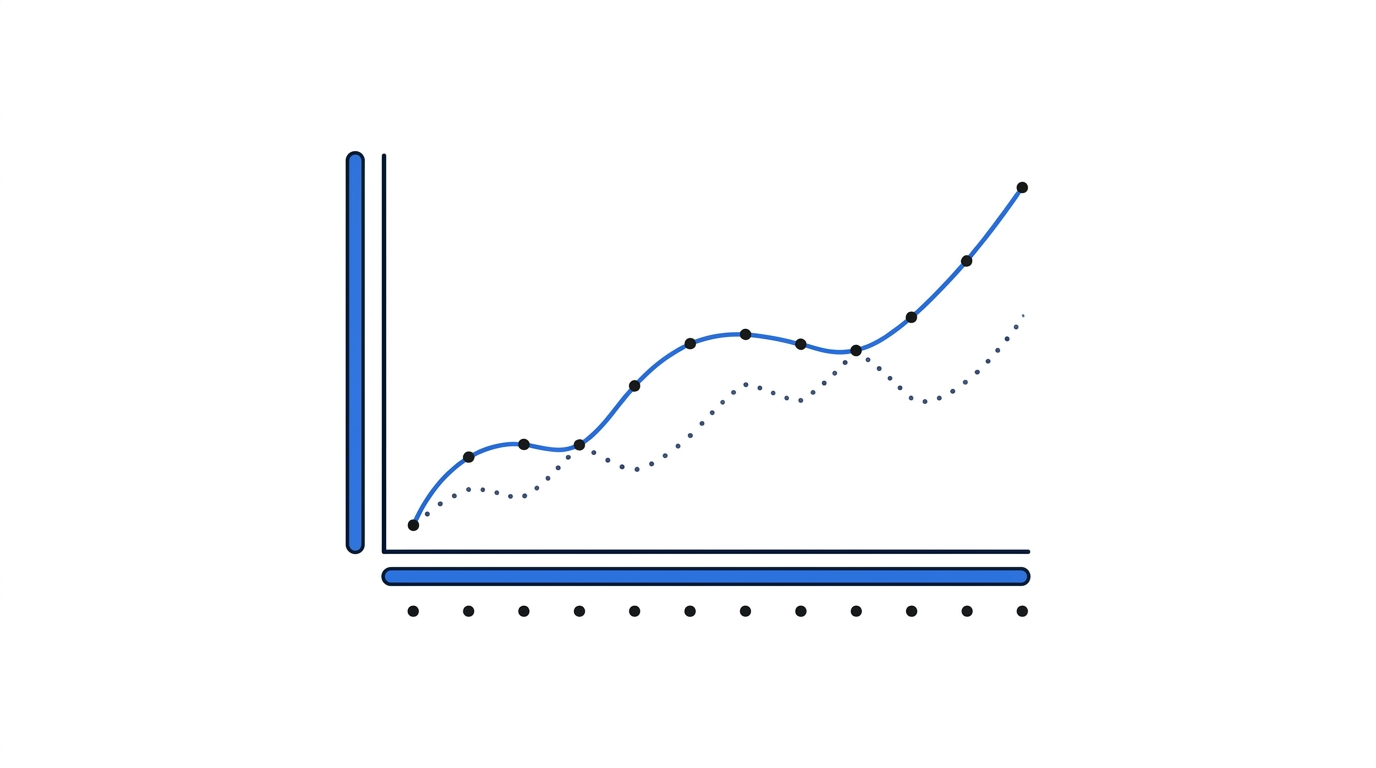
One calculation has limited value. A series of comparable sets can reveal whether strength is increasing, holding or dropping under fatigue.
Record the exercise variation, load, repetitions, RPE and any execution issue that affects interpretation. Also note unusual changes such as a different bar, belt, stance or pause standard. These details explain apparent jumps that the number alone cannot.
Maya logs an e1RM of 388 lb from Monday’s squat. The next week she completes 320 lb for five at RPE 8, giving an estimate near 395 lb. In week three, she performs 325 lb for five at RPE 8.5.
That final set falls between chart columns, so interpolation gives a percentage around 82.4%. The implied e1RM is about 394 lb. Although the bar weight increased, the estimated strength trend is flat from week two to week three.
That is useful. Maya should probably continue the block rather than adding extra work to chase a rising estimate. The heavier set already increased specificity and absolute load.
Common logging failures include:
- Changing the RPE after seeing the calculator output
- Combining different lift variations in one trend line
- Recording prescribed RPE instead of actual RPE
- Treating failed or technically invalid reps as normal data
- Comparing estimates from high-rep accessories with heavy competition lifts
- Ignoring bodyweight, injury or equipment changes that explain the result
Rate the set before running the calculation. This prevents the desired e1RM from influencing the effort score.
A training log also exposes personal bias. If Maya repeatedly rates a final warm-up at RPE 7 and then misses a load predicted from it, her ratings are probably too low. The correction is not a new formula. She needs to recalibrate what two or three reps in reserve feel like.
How LiftnLog simplifies the RPE calculator workflow
Manual calculations are manageable for one set. They become disruptive when a session includes a top set, adjusted back-offs and separate estimates for squat, bench press and deadlift.
The LiftnLog calculator and training approach keeps the sequence direct. Enter the weight, reps and actual RPE from the completed set. The calculator converts that performance into an e1RM without requiring you to find a chart row or divide by a decimal.
Next, use the e1RM to evaluate the prescribed target. If the program calls for a different number of reps or a lower RPE, convert that target into a suggested load. Round it to an available plate combination before lifting.
Then perform the set and rate it again. Keep the planned and actual values separate. A target of RPE 7 followed by an actual RPE 8 is not a failed calculation. It is feedback that the day’s estimate, the initial rating or the lifter’s fatigue state needs correction.
Finally, carry the result into the training log. The estimate should remain attached to the set that produced it, including the lift variation and execution notes. Future guidance published on the LiftnLog blog can help place those calculations inside full training blocks rather than using them as isolated numbers.
This approach removes arithmetic, but it does not pretend the athlete’s RPE rating is automatically correct. The lifter still controls technique standards, effort judgment and the final plate choice.
Using RPE during powerlifting meet preparation
Meet preparation changes how much uncertainty is acceptable. Early in a block, sets of four to six at RPE 6 to 8 can build volume while producing useful estimates. Closer to competition, heavier singles provide information that is more specific to attempt selection.
Suppose Maya reaches a squat single of 365 lb at RPE 8 during meet preparation. Using 92.2%, the set suggests an e1RM near 396 lb. That does not mean 395 lb must be her third attempt.
An opener needs a high probability of success under commands. A second attempt should usually build the total without depending on a perfect day. The third can respond to how the second moves. Equipment checks, depth, pauses, commands and accumulated fatigue deserve more weight than a calculator’s decimal output.
RPE can also prevent an overly aggressive peak. If planned singles rise from RPE 8 to 9.5 while e1RM remains flat, adding weight each week is unlikely to create new strength. Reduce the load, review fatigue and preserve successful practice.
Keep accessory-set RPE in perspective during a peak. A hard leg press or close-grip bench set should not dictate competition attempts. Use competition-lift singles and technically valid low-rep sets as the main evidence.
Common mistakes with a powerlifting RPE calculator
The first mistake is entering the target RPE instead of the actual rating. If a set was prescribed at RPE 8 but reached RPE 9, enter 9. Otherwise, the calculator reports what the program hoped would happen.
The second is treating RPE as bar speed alone. A slow rep can remain submaximal for a lifter whose repetitions are consistently slow. A fast rep can still be close to failure when technique is deteriorating. Judge whether another complete rep was available under the same standard.
The third is forcing every result into the next session. Small e1RM changes may reflect rating noise, rounding or normal readiness. Look for repeated movement across comparable sets.
The fourth is calculating from warm-ups that are too light. Ratings below RPE 6 are difficult to distinguish. If 225 lb could be performed for many more reps, calling it RPE 5.5 rather than 5 provides little useful precision for predicting a max near 400 lb.
The fifth is using the estimate as permission to test. An e1RM can rise while the program still calls for submaximal work. Follow the phase goal.
RPE calculator for powerlifting FAQ
What does RPE 8 mean in powerlifting?
RPE 8 means the lifter estimates that two more technically acceptable repetitions were available. It does not mean the set felt easy. Heavy singles at RPE 8 can feel demanding even when another two repetitions might have been possible across separate attempts.
How accurate is an RPE one-rep max calculator?
Accuracy depends on the set, the formula and the lifter’s rating skill. Low-rep sets performed between RPE 7 and 10 generally provide more useful powerlifting estimates than light sets with many reps in reserve. Compare calculated e1RM with later technically valid performances and adjust your interpretation over time.
Should beginners use RPE for powerlifting?
Yes, with simple boundaries. Beginners can learn RPE by rating their final work set and comparing the rating with video and coach feedback. Keep progression rules objective, such as adding 5 lb when all repetitions meet the required standard and remain within the target RPE range.
Should I use RPE or percentages?
Use both when possible. Percentages provide structure from a known or estimated max. RPE adjusts the load when current performance differs from that baseline. A program might prescribe four reps at RPE 7 with an expected range of 78% to 83%, preventing unusually low or high selections.
Can I calculate RPE from bar speed?
Velocity can help assess effort when you have reliable equipment and individual baseline data, but generic speed thresholds do not account for every lifter or exercise. RPE remains a subjective estimate of repetitions in reserve. Video and velocity data can support that judgment rather than replacing it automatically.
Why did my estimated one-rep max decrease?
A lower e1RM can result from fatigue, poor sleep, inaccurate RPE, a technique change or a genuinely weaker session. Review several comparable exposures before changing the program. A temporary decline during a high-volume block may be expected if performance returns as fatigue drops.
Can I use an RPE calculator for bench press and deadlift?
Yes. Calculate each competition lift separately and keep variations distinct. Many lifters also find their rep strength differs by lift, so a shared percentage chart may estimate squat accurately while slightly overestimating deadlift or bench press. Logged sets reveal those differences.
Make the calculator serve the program
Use an RPE calculator when your program specifies reps and effort but needs a current load, or when a completed set should update your working e1RM. Enter actual performance, round sensibly and confirm the result with the next set.
For lifters following repeatable squat, bench press and deadlift programming, the calculation is most useful when it stays connected to the training log. Use LiftnLog to handle the estimate, then let technically valid sets over several weeks decide whether the program should progress, hold or reduce load. Read next: Powerlifting Autoregulation: How to Adjust Training Without Guessing. Read next: How to Calculate Your Estimated One-Rep Max Using RPE.