
Top Set and Back Off Sets: How Many Back-Off Sets Should You Do?
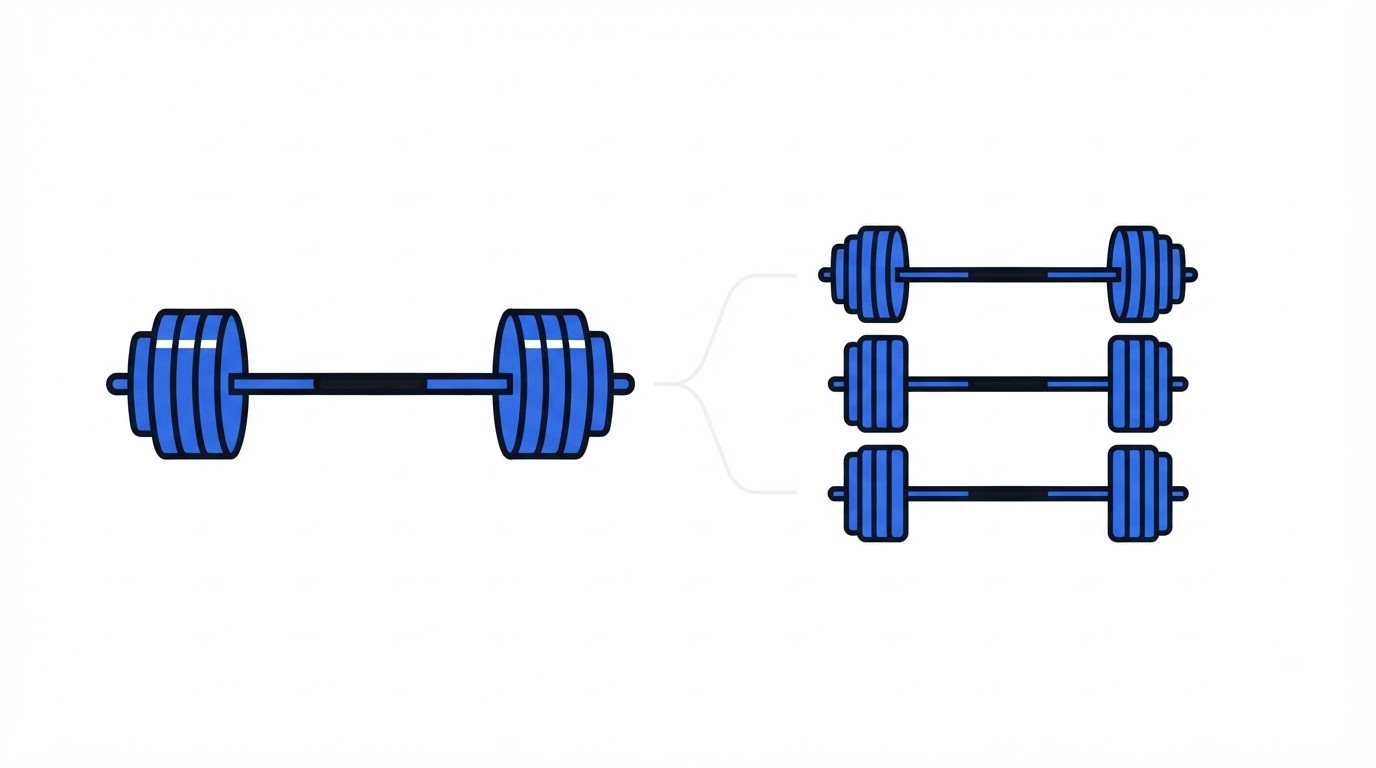
A heavy top set can give a powerlifter useful practice under demanding load, yet the work after it determines much of the weekly training stimulus. Too few back-off sets can leave strength or muscle-building volume low. Too many can turn a productive session into fatigue that lingers into the next squat, bench, or deadlift day.
LiftnLog helps lifters record the top set, the follow-up work, and the RPE outcome so volume decisions can come from recent training rather than memory.
Quick answer: how many back-off sets after a top set?
Choose your top set and back off sets with this sequence:
- Set the top-set target for the day, including reps and RPE.
- Choose a back-off rep range that serves your current goal.
- Start with 2 to 3 back-off sets for most strength-focused training.
- Use 1 to 2 sets after a hard top set at RPE 9 or above.
- Use 3 to 5 sets when the top set is easier and extra volume is the priority.
- Review performance and soreness across the next 7 to 14 days, then add or remove one set.
For most intermediate powerlifters, 2 to 3 back-off sets after a top set at RPE 7 to 8 is a reliable starting point. A lifter pushing a near-limit set, preparing for a meet, or training a lift multiple times weekly will usually benefit from fewer sets that day.
Use the broader guide, Top Sets and Back-Off Sets: How to Program Both for Powerlifting, to place this session structure into a full training block.
Choose back-off set volume from your training goal
Back-off sets have different jobs at different points in a powerlifting plan. The number of sets should follow that job.
| Training goal | Typical back-off work after one top set | Starting number of sets | What to monitor |
|---|---|---|---|
| Strength and competition-lift practice | 3 to 6 reps at a controlled effort | 2 to 3 | Bar speed, position, and RPE drift |
| Muscle-building base phase | 6 to 10 reps with stable technique | 3 to 5 | Local muscle fatigue and next-session performance |
| Peaking or meet preparation | 2 to 4 reps with low accumulated fatigue | 1 to 2 | Readiness for the next heavy exposure |
| Technique practice after a demanding top single | 3 to 5 crisp reps | 1 to 3 | Repeatable setup and consistent depth or pause |
A strength-focused lifter often gets enough quality work from a top set plus 2 or 3 back-off sets. The back-off load lets them rehearse the competition movement without the fatigue cost of repeating the top weight.
A hypertrophy-focused phase can support more sets because the top set is often less taxing. A set of 5 at RPE 7 leaves far more room for 3 or 4 sets of 8 than a set of 3 at RPE 9 leaves for additional work.
Research reviews support using sufficient weekly resistance-training volume for strength and hypertrophy, while also showing that more volume brings diminishing returns and a greater recovery demand. The practical decision belongs at the session level: choose work you can repeat productively next week. The American College of Sports Medicine position stand on progression models provides useful context on managing load, repetitions, and volume over time.
Use top-set difficulty to decide whether to add or remove sets
RPE gives the clearest adjustment tool because it reflects how the load performed that day. The planned load matters, but the actual difficulty should guide the back-off work.
A top set at RPE 7 usually supports the upper end of your planned back-off volume. A top set at RPE 8 calls for the planned number of sets. A top set at RPE 9 or higher often calls for one fewer set, fewer reps per set, or both.
Here is a practical way to apply that rule:
- At RPE 6 to 7, keep 3 to 4 back-off sets if that volume fits the phase.
- At RPE 8, complete 2 to 3 sets with the planned reps.
- At RPE 9, perform 1 to 2 high-quality sets and stop when technique slows.
- At RPE 10, end the main-lift work after the top set unless the plan calls for light technical practice.
Avoid treating RPE as a score to chase. It is feedback. A top triple that reaches RPE 9 because of a poor night of sleep or an unusually demanding warm-up needs a smaller follow-up dose than the same triple at RPE 7.5.
If you are still building confidence with effort ratings, learn how RPE works in powerlifting before making large volume changes from a single session. For some lifters, reps in reserve is easier to estimate during back-off work. This RPE versus RIR guide explains how to use both scales consistently.
Match the back-off rep range to the top set
The top set and the back-off sets can use the same reps, or they can serve different purposes. Both approaches work when the load and fatigue target are clear.
Same-rep back-offs are simple. A lifter may squat 365 pounds for 3 reps at RPE 8, then reduce the load and perform 3 sets of 3. This format keeps practice specific to a competition-style triple.
Higher-rep back-offs add volume efficiently. That same lifter may perform 2 or 3 sets of 5 after the top triple. The lighter load gives more opportunities to practice bracing, depth, and bar path while still building the legs and trunk.
Lower-rep back-offs fit a peaking phase. After a hard double or single, one or two sets of 2 or 3 at a manageable effort can maintain familiarity with heavy loading and protect recovery for the next exposure.
The load drop and set count work together. A small load reduction creates a harder back-off set, which usually calls for fewer total sets. A larger reduction creates room for more reps or more sets. Use this guide to choosing the weight drop after a top set before deciding that a volume problem requires extra sets.
A worked top set and back off sets example
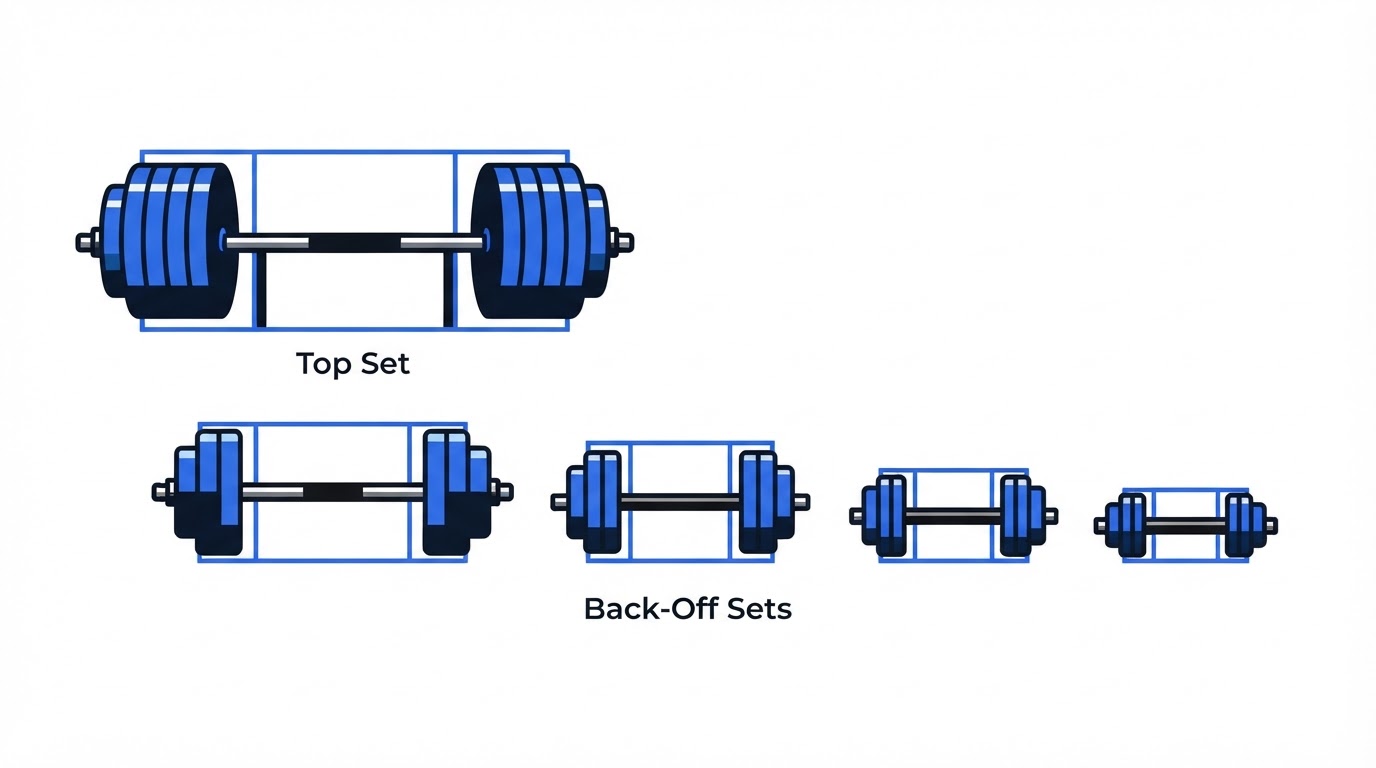
Consider Jordan, an intermediate 83 kg powerlifter who squats once heavy and once lighter each week. On the heavy day, Jordan’s plan calls for a top set of 3 around RPE 8 followed by back-off work for strength practice.
Jordan squats 365 pounds for 3 reps. The third rep slows slightly, yet depth and bracing remain solid. Jordan rates the set RPE 8. The planned back-off load is 315 pounds for 3 sets of 5.
The first two sets at 315 move well at roughly RPE 6.5 and 7. The third reaches RPE 8 but keeps the same depth and bar path. Jordan completes all three sets. The session has one demanding exposure, 15 useful follow-up reps, and enough recovery room for the lighter squat day later in the week.
The next week, 365 pounds for 3 reaches RPE 9 after a disrupted sleep schedule. Jordan performs 2 sets of 5 at 315 instead of 3. The adjustment removes five fatigued reps while preserving the session’s main strength stimulus.
Four weeks later, Jordan is entering a meet-prep block. The top work shifts to a heavy double, and back-offs become 2 sets of 3. The lower volume supports more frequent exposure to heavier loads. Jordan’s log shows whether that change preserves performance across the block.
This is why a fixed rule such as “always do three back-off sets” eventually fails. The set count needs to respond to the work already performed, the next session, and the phase of training.
How LiftnLog makes back-off volume easier to manage
A training log becomes valuable when it shows the pattern behind a hard session. In LiftnLog, begin by recording the top set with its load, reps, and RPE. Enter each back-off set immediately after it, including the actual effort when the session differs from the plan.
Review the prior one or two weeks before the next exposure. Look for repeated signs: back-off RPE climbing at the same load, missed reps, technique decline, or a heavy day that reduces the quality of the next bench or deadlift session. Reduce one back-off set when those signs repeat. Add one set only after the current workload remains stable across multiple exposures.
This record also prevents a common error: changing load, reps, and set count all at once. Keep two variables stable whenever possible. For example, Jordan can retain 315 pounds and 5 reps while moving from 2 to 3 sets. The resulting change is easy to evaluate.
For a wider comparison of logging and programming options, see the best weightlifting apps for powerlifters. Lifters who need individualized review of technique, injury history, or meet strategy may also benefit from considering a powerlifting coach versus a training app.
Common mistakes with top set and back off sets
The most frequent issue is using back-off sets as punishment for a top set that felt easy. A smooth top set can justify planned volume, yet it rarely justifies an unplanned pile of hard sets. Save progressions for the next exposure so the result is measurable.
Another problem comes from counting every set equally. Three sets of 5 at RPE 6 create a different recovery cost from three sets of 5 at RPE 9. Track effort alongside volume.
Powerlifters also sometimes add back-off work while accessory volume stays high. When squat back-offs increase by two sets, consider whether leg press, split squats, or hamstring work needs a small reduction. Weekly stress across the whole plan drives recovery.
Deloads provide another checkpoint. If the same back-off volume feels progressively harder across several weeks, a reduced-volume week can restore performance. Use these signs and timing guidelines for powerlifting deloads to decide whether the problem is one hard day or accumulated fatigue.
FAQ about top set and back off sets
Should I do back-off sets after every top set?
Back-off sets suit most top-set sessions because they add productive practice and volume after the heaviest work. A top single at RPE 9.5 to 10, a test day, or a late peaking session may call for one light technical set or no further main-lift work. Base the choice on the purpose of the day and the next training exposure.
How many back-off sets should a beginner do?
Start with 2 back-off sets after a conservative top set, then build toward 3 when technique and recovery remain stable. Beginners gain from repeatable practice, so keep most work comfortably below maximal effort. A beginner powerlifting program can provide a clearer weekly structure while you learn to rate effort.
Can I use percentage-based back-off sets instead of RPE?
Yes. Percentages provide a consistent starting load, especially when a recent estimated one-rep max is reliable. Check the final set’s RPE and adjust when it falls far outside the target. Percentages describe the plan; RPE shows how the plan performed that day.
Should back-off sets be close to failure?
Most competition-lift back-off work benefits from a few reps in reserve, especially during strength-focused training. This keeps technique useful and supports frequent practice. Higher-effort work can fit accessories or a hypertrophy phase, provided the weekly plan leaves room for recovery.
What if my back-off sets get harder every week?
First, check sleep, bodyweight trend, accessory volume, and frequency of heavy exposures. Then reduce one back-off set or lower the load slightly for the next session. Persistent fatigue across several lifts points toward a broader change in weekly volume or a deload rather than an isolated adjustment.
Start with 2 to 3 back-off sets after a top set at RPE 7 to 8, record how each set performs, and change only one variable at a time. That approach produces a clearer training signal and a more sustainable powerlifting plan.