
Top Sets and Back-Off Sets: How to Program Both for Powerlifting
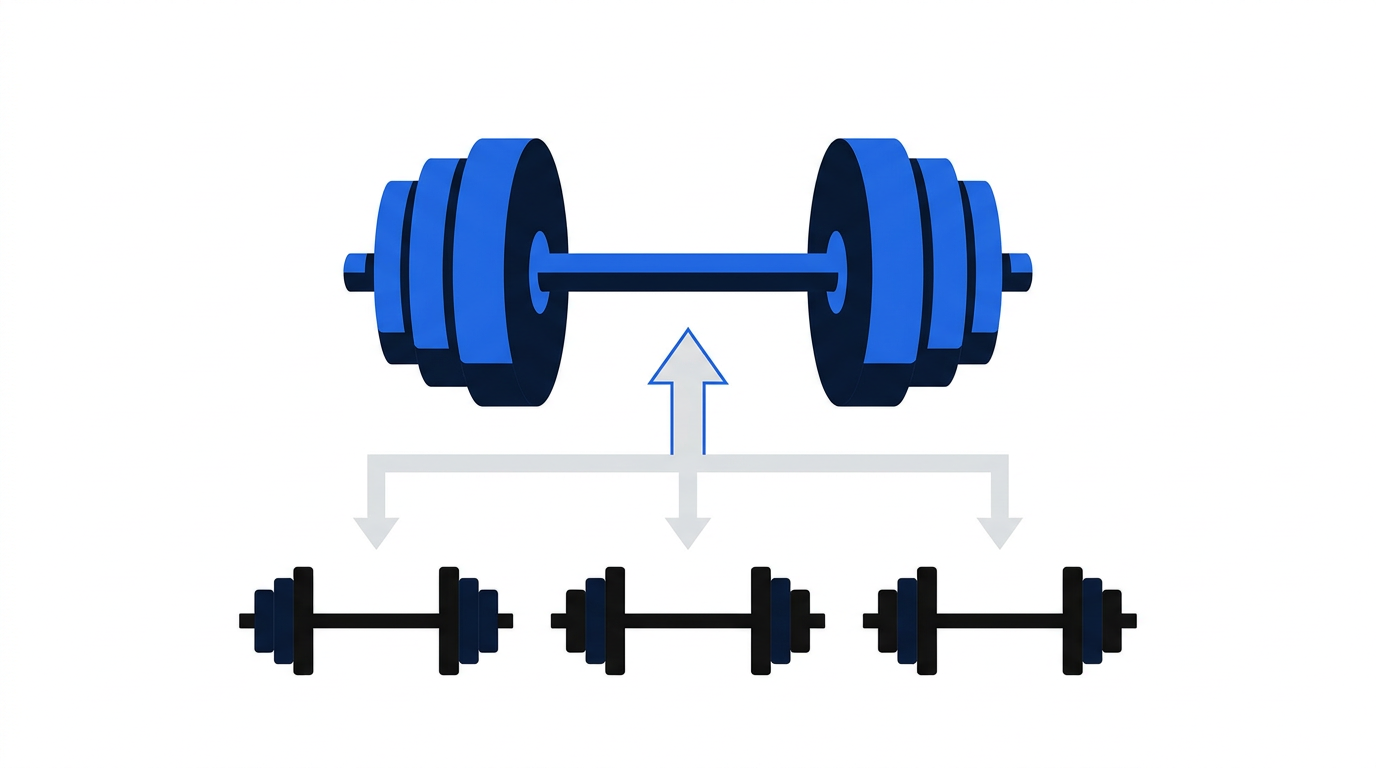
A lifter can arrive with 405 lb written down for the day’s top squat single, only to find that the warm-ups feel unusually slow. If 405 lb moves like a maximum, completing the planned back-off work without adjustment can turn one poor repetition into an unnecessarily damaging session.
Top set and back off set programming solves this by using the first heavy set as a daily performance check. Tools such as LiftnLog help keep the planned target, actual result, and subsequent work in one training record.
Quick answer: how to program top sets and back-off sets
Use this sequence for each main powerlifting movement:
- Define the top-set exercise, reps, and target RPE before training.
- Work up in small enough jumps to avoid accidentally overshooting the target.
- Record the top-set load, repetitions, RPE, and any important technique notes.
- Calculate the back-off load from the top set, estimated one-rep max, or a fixed training max.
- Adjust back-off load or volume when the actual top-set RPE differs from the target.
- Complete the back-off sets within a defined RPE range rather than forcing every planned set.
- Log the result and use repeated trends, not one unusual session, to set future loads.
Define the top set before choosing the back-off sets
A top set is the heaviest programmed working set for an exercise on that day. It can be a single, double, triple, or higher-repetition set. For powerlifting, singles through sets of five are common because they provide useful information without requiring a high-repetition failure set.
The prescription needs three parts: repetitions, target RPE, and an acceptable load range. Writing only “work up to a heavy single” leaves too much room for emotion. A better prescription is “one single at RPE 8, expected range 395 to 415 lb.”
RPE 8 generally means approximately two good repetitions remain. RPE 9 means one remains, while RPE 10 means no additional repetition was available. The repetitions-in-reserve approach has been studied as a resistance-training-specific way to report effort, although accuracy can vary with experience and proximity to failure. The original scale development is available through the National Library of Medicine.
The top-set target should match the day’s purpose. An RPE 7 single offers technique practice with little fatigue. An RPE 8 single gives a clearer readiness signal. RPE 9 may fit a late meet-prep session, but it carries a larger cost and leaves less room for rating error.
Back-off sets serve a different purpose. They provide most of the productive volume at a load the lifter can repeat with stable technique. The top set informs that work, but it should not consume the energy needed to perform it.
Consider Jordan, an illustrative lifter with a planned squat session of one single at RPE 8 followed by four sets of four at 350 lb. The expected top single is 405 lb. That written expectation is useful, but 405 lb is not mandatory if the warm-ups indicate otherwise.
Work up to the top set without creating fatigue
Warm-up jumps should become smaller as the bar approaches the expected top set. Large early jumps save time. Large late jumps increase the chance of missing the target RPE.
For Jordan, a reasonable sequence might be 135 lb, 225 lb, 315 lb, 365 lb, and then a decision. If 365 lb moves normally, 395 or 405 lb may be appropriate. If it is slow or technically unstable, taking 385 lb first provides more information at a modest fatigue cost.
Do not turn every warm-up into another working set. One repetition is usually enough once the load becomes moderately heavy, unless the athlete needs a second repetition to assess technique. Rest long enough before the top set that conditioning does not distort the result.
Warm-up performance should influence the top set, but it should not produce constant second-guessing. Bar speed can feel poor because the athlete is cold, rushed, distracted, or using unfamiliar equipment. Look for several signals together: perceived effort, technical control, pain, and how the previous jump moved.
On Jordan’s example day, 365 lb feels heavier than expected but remains technically sound. He takes 395 lb rather than jumping directly to 405 lb. The single moves like RPE 8.5. That is close enough to the intended stimulus and far more useful than forcing the planned number.
Rate the top set before changing the back-off work
Record the rating immediately after reracking the bar. Waiting until the session is over encourages hindsight to change the score.
Ask a narrow question: how many additional repetitions could have been completed with the same technique? A repetition that requires a major position change, an uneven lockout, or help from a spotter does not count as available capacity.
Newer lifters often rate a slow repetition too highly because it felt uncomfortable. Experienced lifters sometimes make the opposite mistake and call a near-maximum RPE 8 because they have completed similar grinders before. Video can help, but bar speed alone does not determine RPE. Some lifters move smoothly until failure, while others grind successful repetitions at submaximal loads.
Use a tolerance band. If the prescription is RPE 8, ratings from approximately 7.5 to 8.5 can usually be treated as on target. Constantly changing the back-off plan over half an RPE point creates noise without improving the session.
Jordan’s 395 lb single at RPE 8.5 indicates slightly lower performance than expected because the original expectation was around 405 lb at RPE 8. It is still a successful top set. He has enough information to adjust the back-off work without treating the day as a failure.
For more detail on rating repetitions and choosing the next load, use the practical guide to RPE in powerlifting.
Calculate the back-off load from the top-set result
There are three practical ways to calculate back-off weight. Choose one method before the training block starts so the rule remains consistent.
Use a percentage of the actual top-set load
This is the simplest method. For example, back-off work might be programmed at 82 to 88 percent of the top-set weight, depending on the top-set repetitions and the planned back-off repetitions.
If Jordan uses 87 percent of his 395 lb single, the result is 343.7 lb. Round it to a load that can be placed on the bar, such as 345 lb.
This method responds automatically when the top-set load changes. Its weakness is that it ignores how difficult the top set was. Taking 87 percent of an RPE 7 single and 87 percent of an RPE 9.5 single does not produce equivalent back-off work.
Use a percentage of estimated one-rep max
A load and RPE can be converted into an estimated one-rep max, then the back-off sets can use a percentage of that estimate. This is more flexible when top-set and back-off repetitions differ substantially.
Estimates are still estimates. They are affected by the RPE chart, exercise, repetition range, and the lifter’s individual strength profile. Use the same calculation method over time rather than switching formulas whenever another estimate looks better.
The LiftnLog RPE calculator explains how load, repetitions, and effort can be combined to estimate strength. Treat the resulting number as a programming reference, not an official personal record.
Use a fixed training max with an RPE override
Under this method, the back-off work is calculated from a stable training max. The top set acts as an override. If it lands inside the target range, complete the written back-off work. If it is clearly too hard or too easy, apply a predetermined adjustment.
This approach limits day-to-day volatility. It works well for lifters who tend to overreact to individual sessions or whose RPE ratings are still developing. Its drawback is slower response when strength changes quickly.
Research and position stands on resistance training support planned variation in load, repetitions, and volume rather than treating one loading scheme as universally appropriate. The American College of Sports Medicine progression model provides broader context for how training variables can change as lifters advance.
Adjust back-off sets when the top set misses its target
Write the adjustment rules into the program. Deciding after a disappointing top set often leads to one of two reactions: forcing the original plan to prove the strength is still there, or cutting nearly all useful work.
The following starting rules assume the top set was prescribed at RPE 8. They should be refined from the athlete’s training history.
| Actual top-set result | Practical interpretation | Back-off response | Example if 4 x 4 at 350 lb was planned |
|---|---|---|---|
| RPE 7 or lower | Load was too light or performance is above expectation | Add 2 to 3 percent if technique was normal | Use 355 to 360 lb for 4 x 4 |
| RPE 7.5 to 8.5 | Target achieved | Keep the planned work or use the normal percentage rule | Complete 350 lb for 4 x 4 |
| RPE 9 | Daily performance is below the expectation | Reduce load by about 2 to 4 percent | Use 335 to 345 lb for 4 x 4 |
| RPE 9.5 or technical breakdown | Overshoot created additional fatigue | Reduce load and consider removing one set | Use 330 to 340 lb for 3 x 4 |
| Missed repetition or pain | Readiness or movement safety requires review | Stop the planned progression and select a safe alternative | Do not force the written 4 x 4 |
These are operating rules, not physiological laws. Bench press may tolerate smaller load reductions than squat or deadlift because a 5 lb change represents a different percentage of the total load. A lifter who recovers poorly from deadlift singles may also need a volume reduction after an overshoot, not just lighter sets.
Change one variable first. Reduce load while preserving repetitions and sets when the top set was only slightly too difficult. Remove a set when the top set created substantial fatigue or the early back-off sets continue to exceed the target RPE. Changing load, repetitions, and set count at once makes the session easier, but it also makes the training response difficult to interpret.
Jordan recorded 395 lb at RPE 8.5, so he rounds the percentage-based back-off weight to 345 lb rather than completing the original 350 lb. His first set of four is RPE 6.5 and the third reaches RPE 7.5. He completes all four sets. The small adjustment preserves the session’s volume while respecting the top-set result.
Keep the back-off sets inside their own RPE range
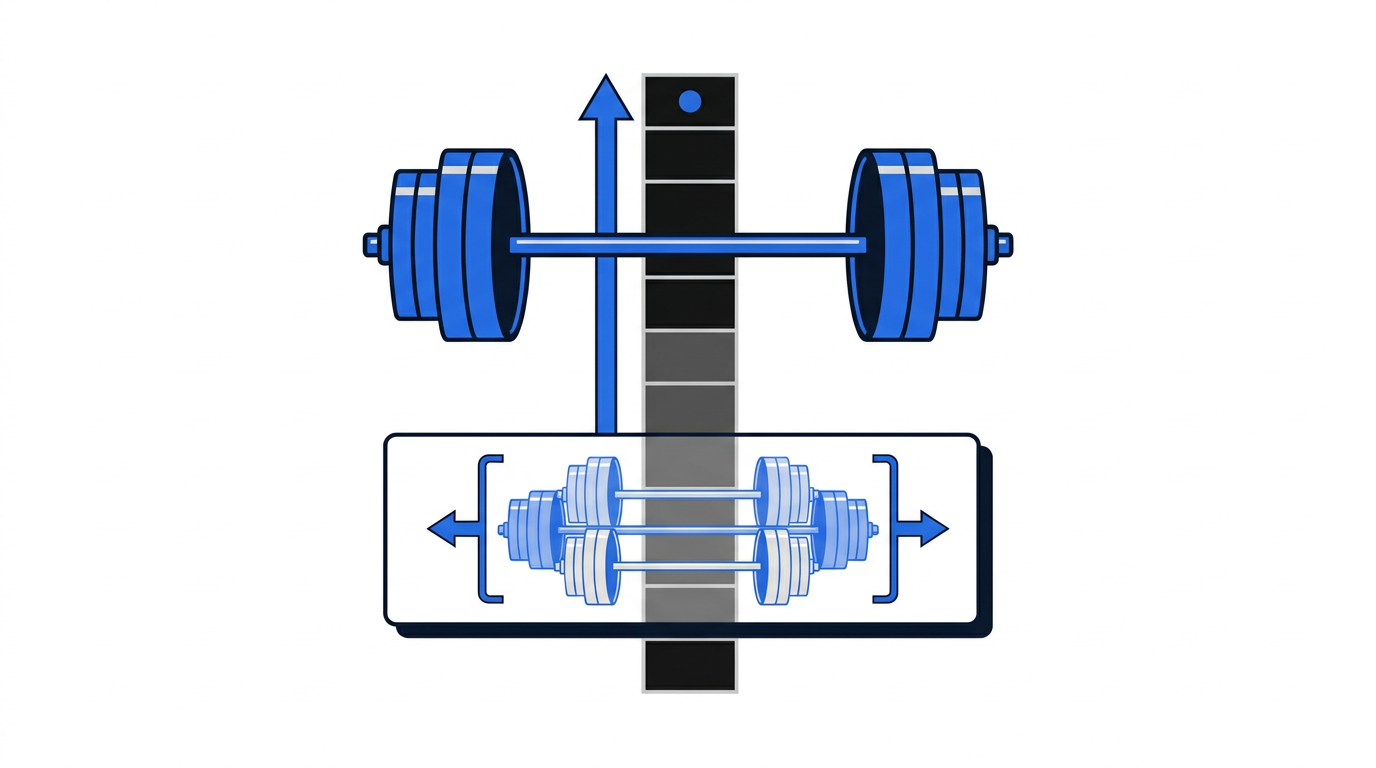
The top set does not provide perfect knowledge of the rest of the session. Fatigue can rise faster than expected, particularly during high-volume squat and deadlift work. Give the back-off sets their own target and stopping rule.
A useful prescription might read “four sets of four at 345 lb, target RPE 6 to 8, stop if technique breaks down or a set exceeds RPE 8.5.” That instruction is more useful than weight and repetitions alone.
Do not increase the weight after every easy first set. The first back-off set should often feel comfortable. Its job is to begin accumulating quality volume, not to prove the initial calculation was conservative. Review the effort after the second set, when the effect of repeated work becomes clearer.
Load reductions should remain small when possible. Dropping from 345 lb to 315 lb may keep the RPE low, but it may also change the intended stimulus. If the required reduction is unusually large, investigate sleep, illness, pain, warm-up choices, and recent training load rather than pretending the session followed the original plan.
The broader process is covered in the powerlifting autoregulation guide, including when daily adjustments are useful and when they become reactive guesswork.
Progress top sets and back-off sets across a training block
Progression should come from repeated evidence. One strong day can be caused by better sleep, a favorable equipment setup, or an RPE rating that was too low. One poor day can be equally unrepresentative.
Review at least several exposures to the same lift and repetition target. If top singles at RPE 8 rise while back-off sets stay within their prescribed effort range, increase the expected top-set range for the next block or add a small amount of back-off load. If top-set load rises but back-off RPE climbs every week, the program may be spending the athlete’s recovery faster than it develops strength.
Jordan’s next squat exposure produces 405 lb at RPE 8. He completes 350 lb for four sets of four, with the final set at RPE 8. A later session reaches 410 lb at RPE 8, but the final two back-off sets exceed the target. The appropriate progression is not automatically heavier back-off work. Keeping 350 lb while monitoring another week may produce better training than chasing both numbers at once.
Top sets and back-offs can also progress independently. During a volume block, hold the top set near RPE 7 while increasing back-off repetitions. During an intensification block, raise the top-set specificity and gradually reduce back-off volume. Near a meet, heavy singles may become more important while fatigue from back-off work is reduced.
How LiftnLog supports top set and back off set programming
A spreadsheet can run this system, but the daily workflow becomes awkward when planned loads, actual RPE, calculated adjustments, and technique notes live in different places. A training log should preserve the decision, not just the completed weight.
In LiftnLog, start by opening the day’s squat, bench press, or deadlift session and checking the planned top-set prescription. Record the actual load and repetitions immediately after the set, then add the RPE while the effort is still clear.
Next, compare the result with the programmed target. If the single was meant to be RPE 8 and was recorded at RPE 9, apply the program’s reduction rule before entering the back-off sets. Log the weight actually used rather than leaving the original prescription as though it happened.
Record each back-off set separately when effort changes across the work. Four sets with the same load can produce four different RPE values. That progression shows whether the selected weight was sustainable and whether the stopping rule worked.
Finally, review prior sessions before changing the following week’s target. The useful pattern is the relationship between top-set performance and completed back-off volume. A top set that improves while the rest of the work repeatedly deteriorates is not the same result as a top set that improves alongside stable volume.
This is where a dedicated record removes friction. The calculation method and coaching judgment still matter, but the evidence is no longer reconstructed from memory. See the current LiftnLog features for the available training workflow.
Top sets and back-off sets for beginners and meet prep
Beginners can use this structure, but they need narrower choices. A new lifter may not yet distinguish RPE 7 from RPE 9 reliably. Start with a conservative top set, such as three repetitions at an expected RPE 6 to 7, and use a fixed percentage for the back-off work. Compare the athlete’s rating with video and coach feedback after the set.
Avoid frequent heavy singles when basic technique is still changing. A technically inconsistent single measures several things at once, including setup skill and confidence under load. Sets of three to five often provide better feedback during an early training block.
Meet preparation changes the purpose. Singles become more specific to competition, and the athlete needs practice with commands, equipment, and standards. The International Powerlifting Federation publishes its requirements in the official technical rules, although lifters should follow the rules of the federation hosting their own meet.
During the final weeks, use top sets to rehearse execution and assess readiness without repeatedly attempting maximums. Back-off volume usually declines as competition approaches, but it should not disappear too early. Removing too much work can leave the athlete practiced at singles but poorly prepared to maintain training quality.
A meet-prep top single should not become an automatic attempt-selection formula. Gym conditions, calibrated plates, commands, travel, and the length of the meet all affect competition performance. Use several sessions, prior meet history, and the athlete’s response under commands.
Common top set and back-off set programming mistakes
The most damaging mistake is overshooting the top set and then treating the written back-off plan as non-negotiable. The top set has already added more fatigue than intended. Forcing the original volume compounds the error.
Another mistake is changing loads for normal variation. An RPE 8.5 instead of 8 rarely justifies rewriting the whole session. Define a tolerance band and leave small differences alone.
Some programs calculate back-off weight from the top-set load while ignoring the top-set RPE. That works when the target is hit consistently. It fails when an accidental RPE 10 single produces back-off work based on an unusually high and fatiguing load.
Poor records create a slower failure. If the log shows only that Jordan squatted 395 lb and then 345 lb for four sets of four, the reasoning disappears. Record that the top set was RPE 8.5, the back-off target was RPE 6 to 8, and the final set reached RPE 8. Those details support the next decision.
Finally, do not use autoregulation to excuse every missed target. Repeated underperformance can indicate inappropriate volume, poor exercise selection, insufficient recovery, or an inflated training max. Daily adjustment keeps a session productive. It does not repair a poorly designed block by itself.
Frequently asked questions about top sets and back-off sets
What percentage should back-off sets be from the top set?
A common working range is roughly 80 to 90 percent of the top-set load, but the correct percentage depends on the top-set repetitions, back-off repetitions, target RPE, and exercise. A set of five after a top single generally requires a larger reduction than a back-off single. Start conservatively and refine the percentage from logged results.
Should a top set be taken to failure?
Usually not. Failure increases fatigue, changes technique, and makes the subsequent back-off prescription less useful. Most training top sets belong around RPE 7 to 9. An RPE 10 effort is better reserved for a deliberate test or competition rather than routine readiness assessment.
Can I use different back-off rules for squat, bench, and deadlift?
Yes. The lifts differ in absolute load, fatigue cost, technical demands, and response to volume. A 5 lb adjustment is minor for a strong squat but may be meaningful for bench press. Build separate rules from each lift’s training history.
What if my first back-off set is much harder than expected?
Reduce the next set by a small amount and reassess. If technique is deteriorating, pain is present, or the set exceeds the stopping threshold, end or replace the remaining work. Also check whether the top-set RPE was underrated.
Do I need an RPE chart for every session?
No. A chart helps estimate loads and one-rep max, especially while learning the system, but it should not override what happened under the bar. Use the same chart consistently and compare its predictions with completed sets.
Is top set and back off set programming suitable year-round?
It can be, although the repetitions and effort should change with the training phase. Use less specific, lower-RPE top sets during volume-focused periods. Move toward heavier singles during meet preparation while reducing back-off fatigue. The structure stays stable even as the prescription changes.
Top sets are most useful when they trigger a defined response. Set the target, rate the result honestly, adjust the back-off work within prewritten limits, and preserve the full decision in the training log. Lifters who want that process recorded alongside their squat, bench press, and deadlift sessions can review LiftnLog and decide whether it fits their programming workflow.